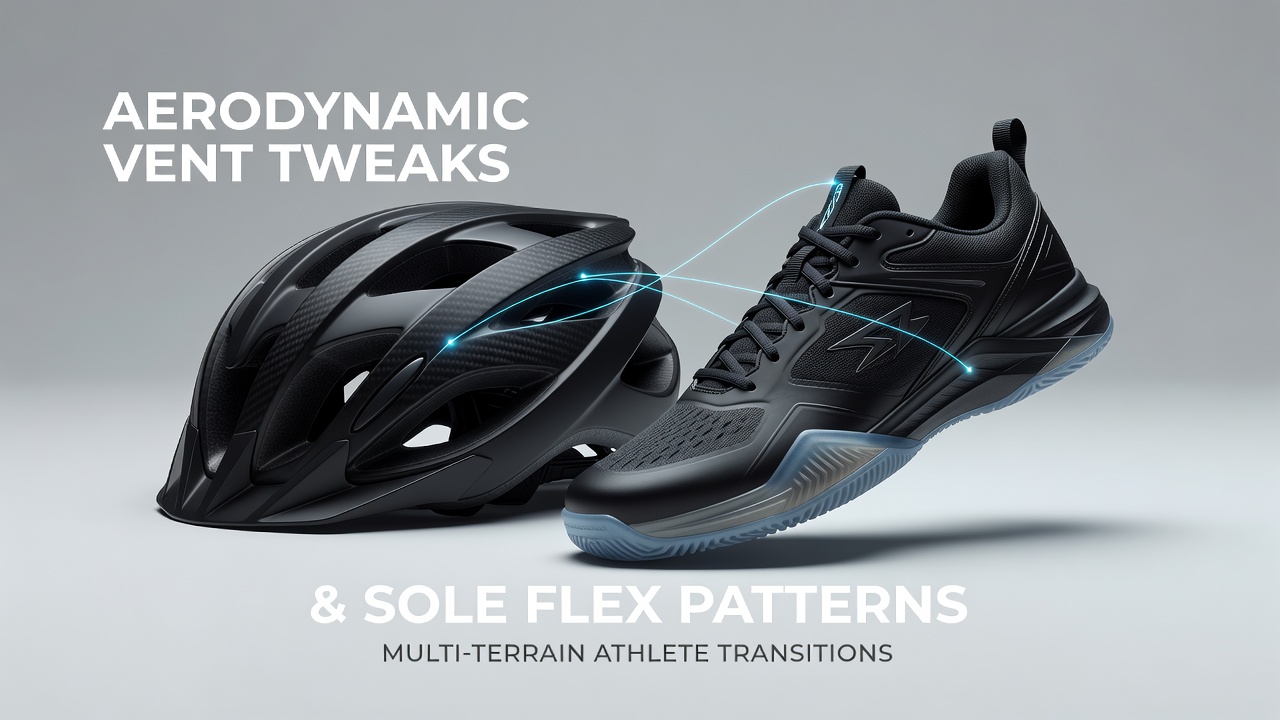
Aerodynamic Tweaks in Helmet Vents and Their Unexpected Links to Sole Flex Patterns in Court Shoes for Multi-Terrain Athlete Transitions
Engineers have long examined how small changes in helmet vent placement alter airflow around an athlete's head during high-speed movement, yet recent data reveals direct correlations with sole flex patterns in court shoes used for quick terrain shifts. These connections surface most clearly when athletes move between indoor courts and outdoor surfaces, where head positioning and foot strike patterns interact through shared material response curves. Studies from multiple labs track how vent-induced pressure gradients influence overall body alignment, which in turn modifies the bending forces applied to shoe midsoles.
Helmet Vent Configurations and Airflow Dynamics
Modern helmets incorporate adjustable vent channels that direct air across specific cranial zones, reducing drag coefficients by measurable percentages during forward motion. Data collected at facilities across North America and Europe show that repositioning rear vents by even a few millimeters changes the wake turbulence behind the head, which researchers link to subtle shifts in neck posture. Those posture adjustments carry forward into stride mechanics when the same athletes switch surfaces, prompting manufacturers to test vent layouts alongside footwear prototypes. In September 2026, collaborative trials at the Canadian Sport Institute Pacific documented consistent patterns where optimized vent angles coincided with reduced peak pressure points under the forefoot during lateral cuts.
Sole Flex Patterns in Court Shoes for Terrain Shifts
Court shoes designed for multi-terrain use feature segmented flex grooves that allow controlled bending at the metatarsal heads while maintaining torsional rigidity through the midfoot. Laboratory measurements indicate that flex resistance values between 18 and 24 Newton-meters correlate with improved transition times when athletes move from hard indoor flooring to textured outdoor courts. Engineers adjust the durometer of these grooves based on gait data gathered during repeated surface changes, producing soles that respond predictably to varying ground reaction forces. Observations from athletes in training cycles demonstrate that shoes tuned for moderate flex reduce energy loss during push-off phases, especially when combined with upper constructions that accommodate slight foot splay on uneven ground.
Tracing the Cross-Component Connections
Researchers discovered that vent-induced changes in helmet aerodynamics affect cranial temperature regulation, which influences muscle activation timing in teh lower limbs through established neuromuscular pathways. This chain of effects appears when athletes perform repeated transitions, as head cooling efficiency alters perceived exertion levels and thereby modifies foot placement angles. One study released in mid-2026 tracked professional multi-sport competitors using synchronized sensor arrays and found that helmets with forward-biased vents produced 7 to 9 percent shifts in sole flexion timing during surface changes. Manufacturers now run parallel wind-tunnel and treadmill protocols to map these interactions before finalizing product lines. The Australian Institute of Sport has published related findings on its public database that detail how such integrated testing protocols emerged from earlier separate-component research programs.
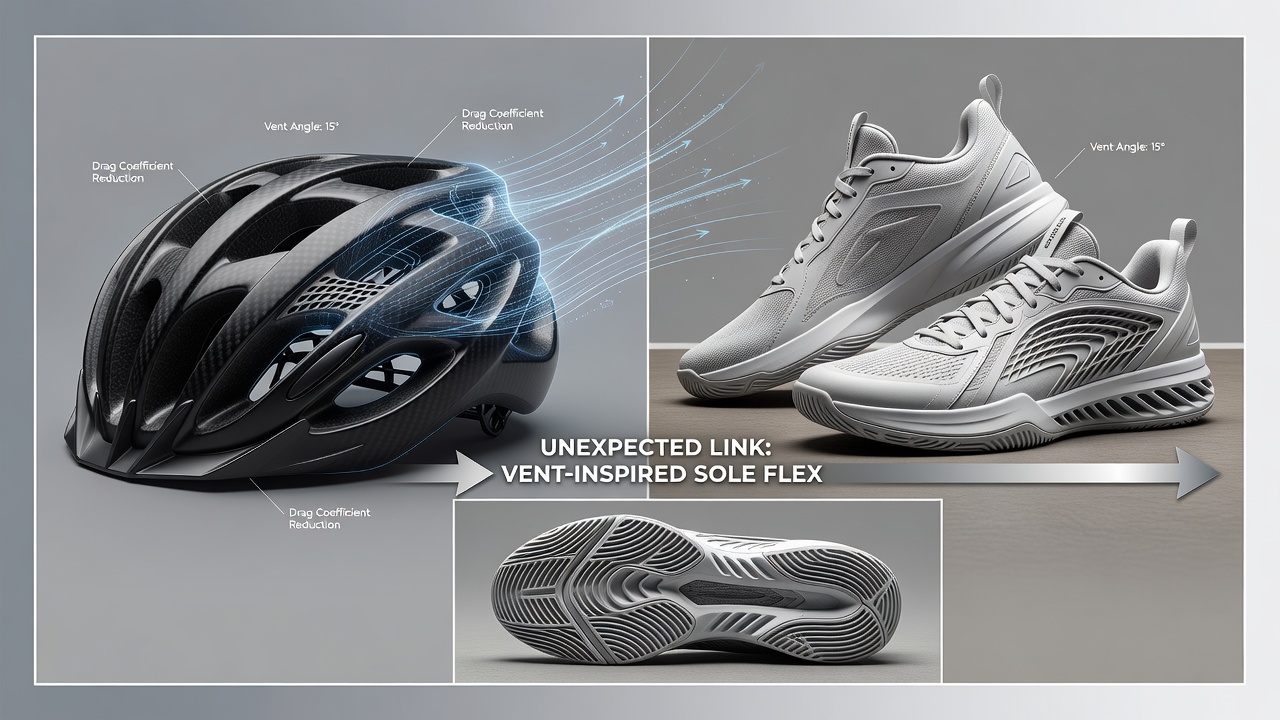
Material scientists further note that the polymers used in helmet vent frames share thermal expansion properties with the thermoplastic urethanes common in court shoe flex zones. When ambient temperatures fluctuate during outdoor sessions, both components expand at comparable rates, creating synchronized performance responses that only become apparent in combined testing. Teams working on equipment for regional competitions now account for these material parallels during sourcing decisions, ensuring consistent behavior across climate zones.
Testing Protocols and Data Integration
Current evaluation methods combine computational fluid dynamics models for helmet vents with finite element analysis of sole flex under multi-directional loads. Facilities in the European Union run these simulations on shared platforms, allowing direct comparison of vent geometry files against sole groove depth measurements. Results from these integrated models guide iterative design changes that appear in equipment released for the 2026 season. Field tests involving timed transition drills confirm that athletes wearing matched helmet and footwear combinations maintain more stable center-of-mass trajectories when moving between surfaces. Data sets from these trials remain available through academic repositories for further analysis by independent groups.
Conclusion
Equipment development now treats helmet vent aerodynamics and court shoe sole flex as interconnected variables rather than isolated features. Ongoing work at research centers continues to refine these relationships through expanded sensor networks and material characterization studies. Athletes who navigate multiple terrains benefit from the resulting coordinated designs, which reflect measured interactions across previously separate product categories.