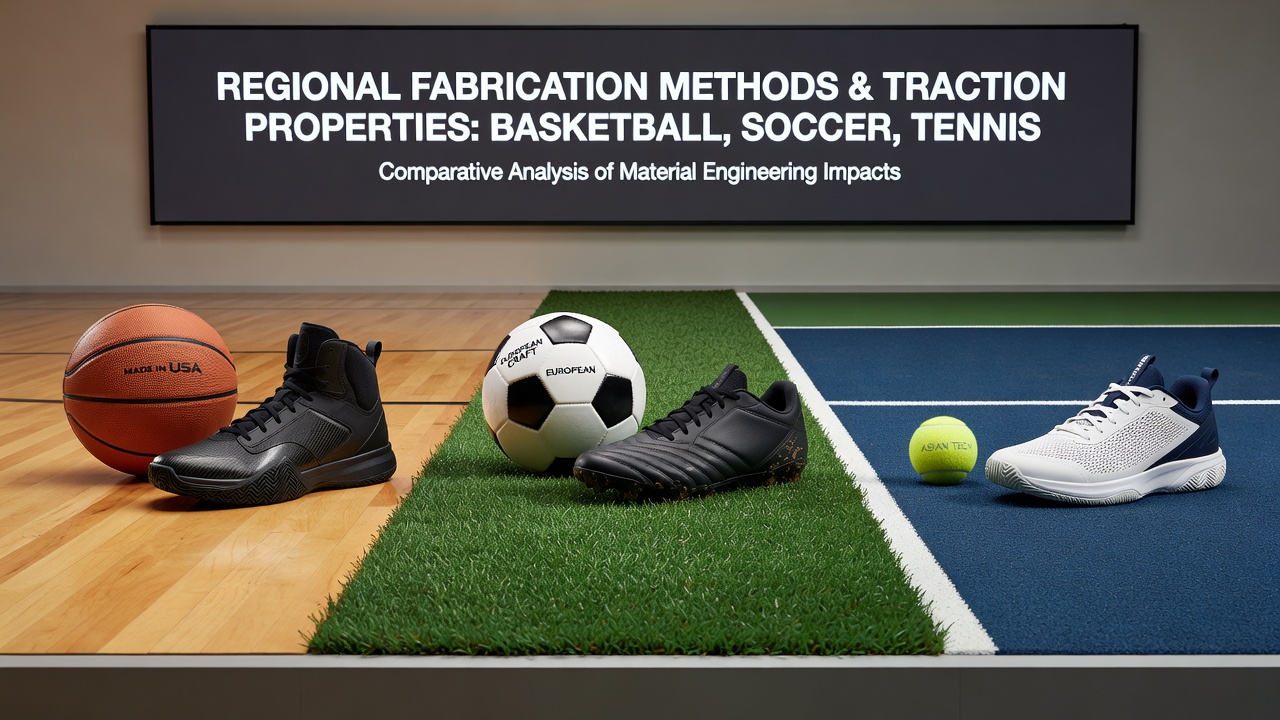
Regional Fabrication Methods and Their Effects on Traction Properties Across Basketball, Soccer, and Tennis Equipment Lines
Regional fabrication methods shape traction properties in basketball, soccer, and tennis equipment through variations in material compounding, molding precision, and surface patterning that manufacturers apply differently across continents. Production facilities in East Asia often rely on high-volume rubber extrusion processes that create dense, multi-directional tread patterns suited for indoor hardwood and synthetic courts, while European plants emphasize injection-molding techniques that produce segmented studs with specific hardness ratings for natural grass and clay surfaces. North American operations frequently incorporate recycled polymer blends that alter grip coefficients under varying temperatures and moisture levels.
Material Sourcing and Compounding Differences
Suppliers in Southeast Asia source natural latex and synthetic rubber compounds that achieve durometer ratings between 65 and 75 Shore A, allowing outsoles to flex and conform during rapid lateral movements common in basketball. European fabricators, by contrast, blend thermoplastic polyurethanes with silica fillers to reach higher abrasion resistance, a formulation documented in industry reports from the European Committee for Standardization. These choices directly influence static and dynamic friction values measured on standardized test rigs, where Asian-sourced compounds typically register higher initial bite on polished surfaces yet show faster wear after repeated cycles. Observers note that October 2026 production data from major suppliers indicates continued investment in automated mixing lines that maintain tighter tolerances on filler distribution, reducing batch-to-batch variation in traction performance.
Outsole Pattern Engineering by Sport
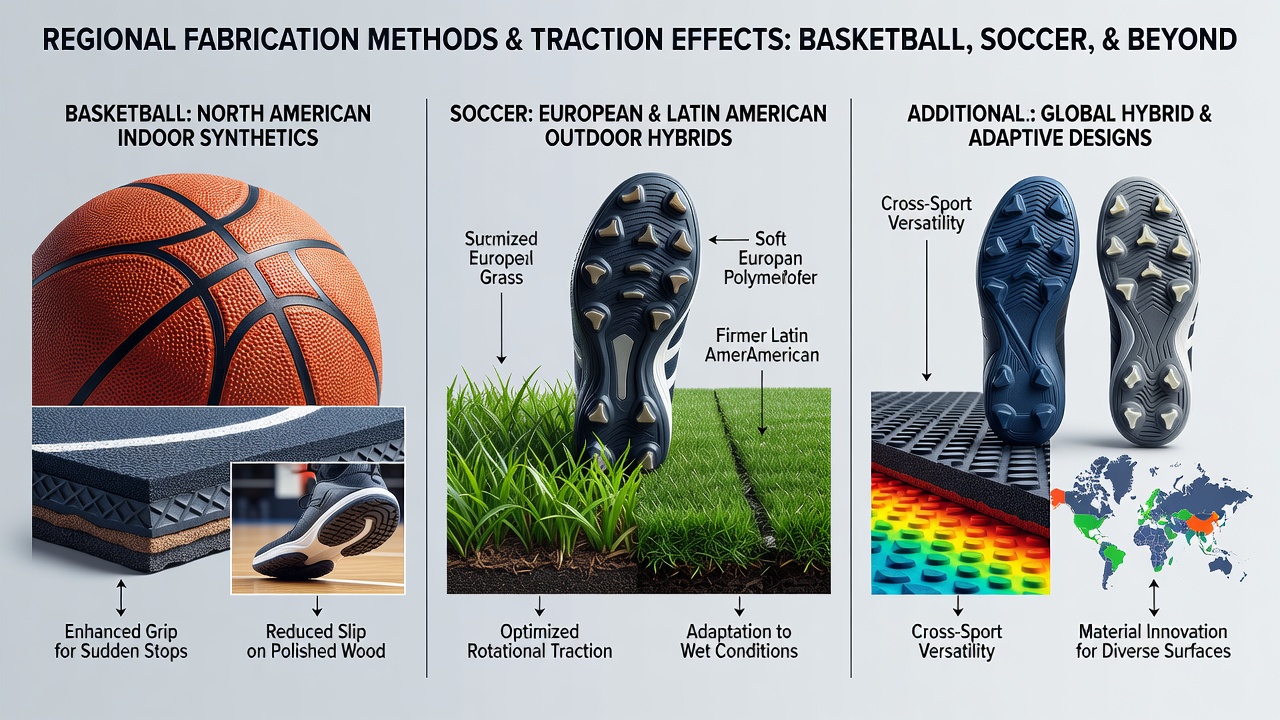
Basketball footwear manufactured in Chinese facilities often features herringbone or zigzag grooves spaced at 4–6 millimeter intervals to channel dust and maintain contact on maple floors, whereas soccer cleats from Italian and German lines use conical or bladed studs positioned according to biomechanical load maps derived from player tracking systems. Tennis shoes assembled in Vietnamese and Indonesian plants apply hybrid tread designs that combine gum-rubber forefoot zones with harder heel inserts, optimizing transition from baseline slides to net approaches on hard courts. Research conducted at the University of Queensland's sports engineering laboratory has quantified how these pattern geometries affect peak torque values, revealing measurable differences when identical upper constructions receive regionally distinct outsoles. Those measurements show that stud configurations optimized for European turf pitches generate 12–18 percent higher rotational resistance than equivalent North American molded patterns tested on the same substrate.
Environmental and Regulatory Influences
Climate-specific regulations further differentiate fabrication approaches. Facilities operating under EU REACH guidelines limit certain plasticizers in rubber formulations, resulting in slightly higher glass-transition temperatures that preserve traction consistency in cooler conditions typical of northern European clay courts. Manufacturers in warmer climates adjust vulcanization cycles to compensate for humidity, producing compounds that resist softening during prolonged exposure to high surface temperatures on outdoor basketball courts. Data compiled by the International Tennis Federation's equipment testing program demonstrates that these adjustments translate into measurable differences in slide-stop distances when shoes are evaluated across controlled humidity chambers set to simulate regional playing environments. Production records from October 2026 indicate that several major brands have begun integrating regional climate data directly into compound recipes to standardize friction coefficients across global distribution networks.
Performance Metrics Across Equipment Categories
Independent laboratory evaluations of basketball sneakers, soccer boots, and tennis shoes reveal consistent correlations between fabrication origin and measured traction parameters. Shoes produced under high-precision European molding lines exhibit narrower standard deviations in coefficient-of-friction readings across repeated trials, while high-volume Asian lines deliver broader performance envelopes that accommodate diverse playing surfaces within a single model range. Soccer cleats fabricated in Brazil often incorporate regional ethylene-vinyl-acetate blends that balance stud rigidity with sole flexibility, a combination tested extensively on both natural and artificial turf. Tennis racket grip pallets and overgrips follow parallel regional patterns, with Japanese production favoring textured synthetic wraps that enhance torsional control during spin-heavy strokes, and American facilities prioritizing moisture-wicking substrates that maintain tackiness under sweat exposure. These variations arise from established supply-chain practices rather than isolated design choices.
Conclusion
Regional fabrication methods continue to determine traction characteristics across basketball, soccer, and tennis equipment through distinct material formulations, molding techniques, and regulatory constraints that each production zone applies. Equipment testing programs document how these differences manifest in friction coefficients, wear rates, and sport-specific movement demands, providing measurable data that informs sourcing decisions for performance consistency across global markets.